Internal Audit

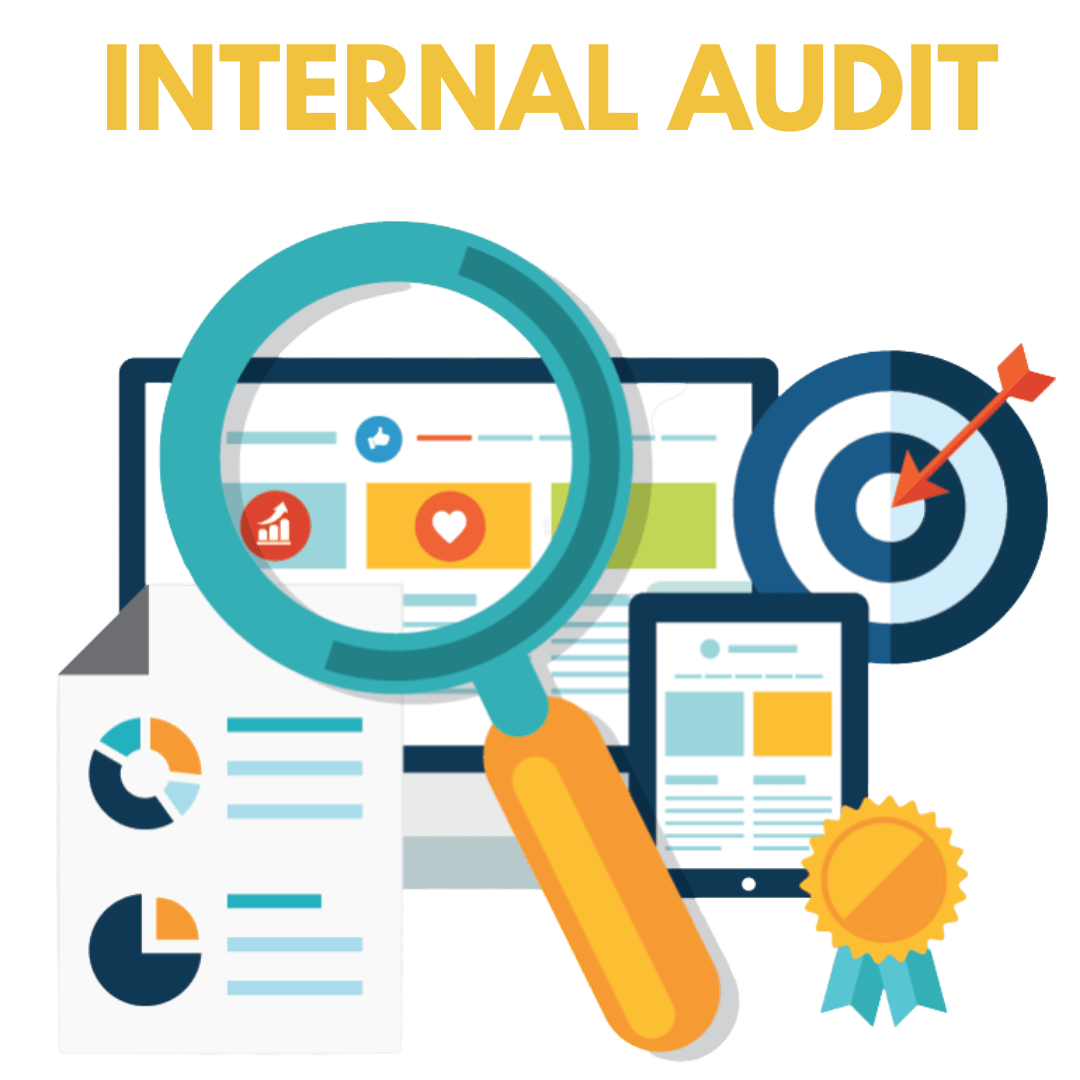
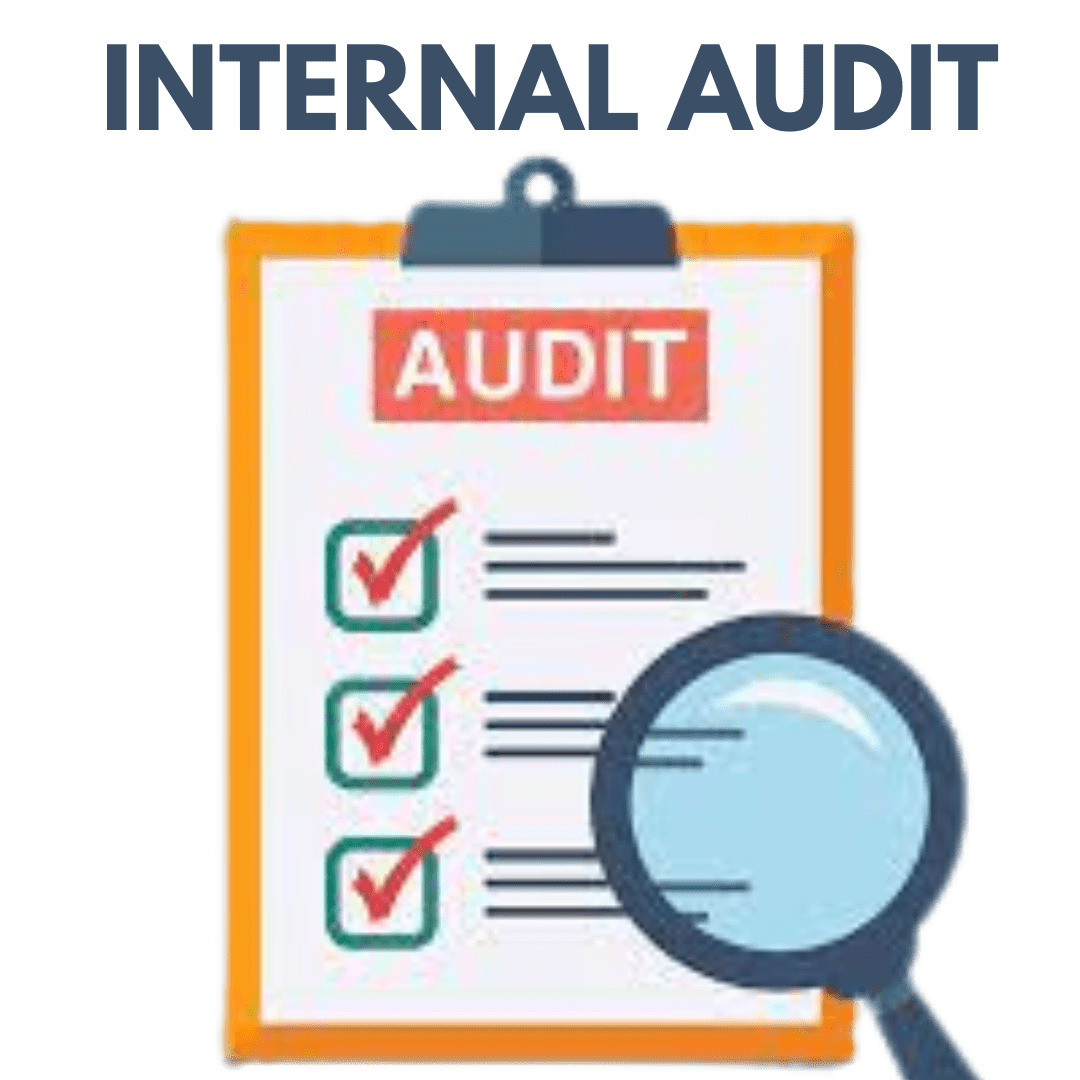
Internal audit checks how well a company maintains operational efficiency and manages accounting processes while complying with its standard rules and regulations. Conducting audits from time to time ensures the firms are strict enough in following the administrative fundamentals and sticking to a maximum accuracy rate so far as financial reporting is concerned.
INTERNAL AUDITS:
Description: Internal audit checks how well a company maintains operational efficiency and manages accounting processes while complying with its standard rules and regulations. Conducting audits from time to time ensures the firms are strict enough in following the administrative fundamentals and sticking to a maximum accuracy rate so far as financial reporting is concerned.
An internal auditor is appointed to check the overall performance of different companies with respect to the administrative, executive, financial, and legal standards they follow. The audit effectively identifies corporate frauds while assessing the internal controls to ensure a business’ efficiency.
Key elements in internal audits:
- Internal audit is a process through which the companies get to know the loopholes in the system and improve the respective aspects for making businesses more efficient.
- Companies recruit auditors to acquire certification from a popular internal audit institute to check its different business activities and offer consultancy services.
- Compliance, IT, Performance, Operational, and Environmental audits would be a few commonly found internal audits.
- It is different from external audits in which auditors validate the accuracy of the financial documents and send reports to stakeholders and other external members associated with the organization.
Understanding Internal Audit Process: The purpose of an internal audit is to check the effectiveness and operational standards framed by an organisation. An organisation may have a set of rules for operations, such as placing orders, accepting deliveries, and making payments. An internal audit also helps in knowing whether the employees follow the internal operational standards.
An internal audit helps in identifying problems or inefficiencies and taking necessary corrective steps. Internal audits can identify any frauds by employees, such as embezzlement of funds. The audit can also identify whether there are deliberate cost overruns, whether a particular vendor is getting preference over other low-cost suppliers.
There may be a need to identify employee rotation between different roles and functions. An internal audit can check any potential threats or financial losses. An organisation can plug in financial leakage. The process enables the identification and correction of a lapse in procedures before the statutory audit.
Types of Internal Audit:
1.Compliance Audits: An internal auditor checks whether the company complies with the rules, regulations, and laws of the region, state, or country it operates. In case of non-compliance, firms are subject to payment of fines and penalties or other punishments. As far as the compliance audit is concerned, companies must stick to Foreign Corrupt Practices Act (FCPA) or General Data Protection Regulation (GDPR).
- IT Audits: The Information Technology audits include the assessment and evaluation of the technological infrastructure. The auditor, in this case, checks if the hardware and software equipment is processing requests and operating properly. This audit covers the cyber issues that might require immediate attention. In addition, the professional examines the general IT controls, system operation, and backup-recovery processes.
- Performance Audits: While conducting this type of audit, the auditor ensures that the companies’ standards and core competencies are efficiently met. The management sets these standards, expecting employees and the overall workforce to strengthen their performance while remaining compliant with the standards and regulations.
4.Operational Audits: The operational auditors are accountable for issues with the company’s operational infrastructure. They check how efficiently a business works to achieve its set output. Starting from quality control, accounting controls to human resources function, they assess every aspect of the company. In addition, they also offer advice and guidelines to improve the operational procedures to enhance the company’s efficiency and effectiveness.
- Environmental Audits: Having an eco-friendly environment is a must for any company. When an auditor is asked to conduct environmental audits, they see that the premises do not violate any environmental laws or policies.
Advantages of Internal Audits:
- The scope of the internal audit is defined by management or the Board (not an outside agency or adversarial entity)
- Internal Audit “reports” directly to management or the Board (not an outside agency or adversarial entity)
- Improves the “control environment” of the organization
- Makes the organization process-dependent instead of person-dependent
- Identifies redundancies in operational and control procedures and provides recommendations to improve the efficiency and effectiveness of procedures
- Serves as an Early Warning System, enabling deficiencies to be identified and remediated on a timely basis (i.e. prior to external, regulatory or compliance audits)
- Ultimately increases accountability within the organization.
So with a properly staffed internal audit function, management would have, at its fingertips: an advocate, a risk manager, a controls expert, an efficiency specialist, a problem-solving partner and a safety net.
Conclusion: An internal audit can ensure that an organization can secure timely compliance with law and regulations. The audit provides a degree of safety and helps manage risk emerging from fraud, abuse of power, or any other scenarios. An internal auditor provides the management with their objective assessment of the processes and accounts. The management can improve their operational and financial performance using the services of an internal auditor.
Related products
-
Bharat Inc., IPR & QUALITY, TAX FILINGS & COMPLIANCE
MSME Registration
MSME REGISTRATION
Small scale businesses play a vital role in improving the economy of any country. To encourage new and existing business, the government of India has launched many schemes to help small and medium scale businesses to sustain and grow. To avail all these beneficial schemes, you need to get your MSME registration done. MSME registration is also known as Udyog Aadhaar or SSI registration.
The MSME stands for Micro, Small and Medium Enterprises and is the main Government body that deals with the management & preparation of guidelines, rules, and laws regarding small scale industries in India. On October 02, 2006, the MSME (Micro, Small and Medium Enterprises) became operational and it was introduced to facilitate, develop & promote the competitiveness of the MSME
SKU: EBY4KFDX -
Bharat Inc., IPR & QUALITY, Start Up Registration
StartUp India Registration
Startup India Registration
Startup India is a flagship initiative of the Government of India, intended to build a strong ecosystem that is conducive for the growth of startup businesses, to drive sustainable economic growth and generate large scale employment opportunities. The Government through this initiative aims to empower startups to grow through innovation and design.
Several programs have been undertaken since the launch of the initiative on 16th of January, 2016 by Hon’ble Prime Minister, to contribute to his vision of transforming India into a country of job creators instead of job seekers. These programs have catalyzed the startup culture, with startups getting recognized through the Startup India initiative and many entrepreneurs availing the benefits of starting their own business in India.
SKU: EBET8G5S -
Bharat Inc., IPR & QUALITY, TAX FILINGS & COMPLIANCE
ISO Certification
Get ISO Certificate, Increase Credibility and Trust of Your Company.
ISO Certification Increasing the Credibility of the Organization and Trust Values there by Enhancing the Quality Levels.
ISO Certification:
Documentation
Inspection
Training
Certification
SKU: EBPUQFWS -
Bharat Inc., IPR & QUALITY, TAX FILINGS & COMPLIANCE
TAN Registration
TAN Registration
Tax Deduction Account Number or Tax Collection Account Number is a 10-digit alphanumeric number issued by the Income-tax Department (we will refer to it as TAN). TAN
is to be obtained by all persons who are responsible for deducting tax at source (TDS) or
who are required to collect tax at source (TCS).SKU: EBIKRWJC -
Bharat Inc., IPR & QUALITY, TAX FILINGS & COMPLIANCE
MPEDA Registration
MPEDA REGISTRATION
MPEDA registration is mandatory for exports of Fish and Fishery products from India. With the online registration system, any prospective exporter can apply online for getting MPEDA Registration. The documents are submitted by uploading scanned copies in pdf format and the payment is accepted through a payment gateway. The existing exporters can apply online for renewals, endorsements or cancellations. The applicant can see the status of his application through his login credentials
SKU: EB5UTZ1J